Quick Answer: Legal service request management is how in-house legal teams capture, triage, route, track, and report on requests from across the business. Unlike generic ticketing, it accounts for privilege, ambiguity, and business context. Streamline AI brings structured intake, automated routing, workflow automation, and reporting together in a single legal-first platform, enabling Legal to scale service delivery without adding headcount.
Legal teams are fielding more requests than ever, from more corners of the business, while still relying on tools that were never built to handle legal work. The Association of Corporate Counsel's 2024 Chief Legal Officers Survey found that 59 percent of CLOs saw their workload increase over the past year, even as cost-cutting mandates made it harder to justify new hires.
A contract review lands in one inbox, an NDA request shows up in Slack, and a privacy question gets buried in a spreadsheet three tabs deep. The volume is real, but the deeper problem is that in-house legal service requests arrive incomplete, unclear, or misrouted, which makes the legal team look slow even when everyone is working at full capacity.
This article breaks down what legal service request management actually involves, why legal work resists the standard ticketing playbook, and how to build a process that holds up as request volume climbs.
Key Takeaways
- Legal service request management helps in-house teams centralize, triage, route, and track legal work with far more consistency than scattered email and chat.
- Legal requests differ from generic tickets because they often involve privilege, ambiguity, changing facts, and heavy business context.
- Email, Slack, spreadsheets, Jira, and Asana often create intake gaps, routing delays, and limited visibility for legal teams.
- A scalable process should combine structured intake, automated routing, SLAs, triage rules, workflow automation, and reporting.
- Streamline AI helps legal teams manage intake, routing, workflows, and visibility in one legal-first platform. Book a demo to see how it works.
What Is Legal Service Request Management?
Legal service request management is the structured way an in-house team handles the steady stream of work from sales, procurement, HR, finance, and product. It covers how a request is captured, organized, prioritized, assigned, worked on, and reported on from start to finish. Done well, it gives Legal a repeatable system for managing demand while giving requesters and legal leaders a clear view of where things stand.
The goal is not to bury the business in red tape. It is to replace guesswork and informal handoffs with a process that collects the right details upfront, sends each request to the right person, and tracks progress so nothing slips. When that foundation is in place, a smarter legal intake, triage, and matter management system starts to feel less like overhead and more like the connective tissue that keeps the legal function running.
How It Differs From Generic Ticketing And ITSM
Most service request management systems borrows its thinking from IT service management, where tickets follow predictable categories and clean resolution paths. Legal work rarely cooperates with that model. A single request might require legal judgment, confidential handling, privilege protection, and back-and-forth across several stakeholders before anyone can call it resolved.
A generic ticketing system can log that a request came in, but it usually misses how legal teams assess risk, weigh urgency, assign work, and manage approvals. The result is a queue that technically tracks requests but tells you almost nothing about the legal substance behind them. That gap is exactly why teams that try to run Jira for lawyers often end up fighting the tool instead of using it.
Core Components Of A Legal Request Management System
A complete system is more than an intake form bolted onto a shared inbox. It is a set of connected components that move a request from submission to resolution while keeping everyone informed along the way. Each piece reduces a specific kind of friction that slows legal teams down.
- Centralized Legal Intake: One front door for every request, regardless of which team sends it.
- Structured Request Forms: Forms that collect the right details based on the type of work being requested.
- Request Type Classification: Sorting requests by matter type so they follow the correct path.
- Legal Request Routing: Automatically sending each request to the right owner.
- Priority And Urgency Rules: Logic that flags time-sensitive work before it stalls.
- Workflow Automation: Approval chains and escalations that run without manual chasing.
- Status Tracking: A live view of where each request sits.
- Collaboration History: A record of decisions, comments, and context tied to the request.
- Reporting and Workload Analytics: Data on volume, turnaround, and capacity.
Why Legal Requests Resist Standard Workflows
Legal requests are often ambiguous, incomplete, and context-dependent in ways that most service categories are not. A commercial contract review, a privacy question, an employment issue, a marketing approval, and a regulatory matter each require distinct intake questions, routing rules, approval paths, and timelines. Forcing them through a single rigid queue means most of them are handled incorrectly.
There is also the problem of changing facts. A request that looks like a quick NDA on Monday can turn into a layered negotiation by Wednesday once the counterparty pushes back. Legal teams need flexible workflows that bend with the work, which is why choosing the right legal process automation software matters more than picking whatever ticketing tool IT already has a license for.
| Component | What It Handles | Why It Matters |
|---|---|---|
| Centralized intake | All incoming requests | Stops work from scattering across channels |
| Structured forms | Request details | Reduces back-and-forth before work starts |
| Request routing | Assignment | Gets requests to the right lawyer fast |
| Priority rules | Urgency | Keeps time-sensitive work from stalling |
| Workflow automation | Approvals and escalations | Cuts manual coordination |
| Status tracking | Progress | Gives requesters and leaders visibility |
| Reporting | Volume and turnaround | Surfaces bottlenecks and capacity needs |
Common Service Request Management Challenges For In-House Legal
Most legal service delivery problems start before a lawyer ever opens the file. When intake is scattered, information is missing, and routing depends on who happens to remember the process, the team loses time, business stakeholders lose visibility, and leadership has no clean read on demand. The sections below cover the patterns that recur again and again as in-house legal service requests pile up in fast-growing legal departments.
Scattered Intake Across Email, Slack, And Spreadsheets
When requests can arrive through any channel, no single channel holds the full picture. A request that starts as a Slack message, moves to email, and ends up referenced in a spreadsheet becomes nearly impossible to track for ownership, status, urgency, or history. This is the scattered intake problem that centralizing legal requests with an intake system is designed to solve.
The hidden cost is duplicated effort. Two lawyers can unknowingly work the same request, or a request can sit untouched because each person assumes someone else picked it up. Neither outcome is the legal team's fault, but both land on Legal's reputation.
No Structured Information At The Point Of Request
When a request comes in as a one-line email, the lawyer has to chase basic facts before any real work can begin. Who is the counterparty? What is the deadline? What is the deal value? Each missing detail is another round-trip that delays the work and frustrates the requester who thought they had already asked.
Structured legal intake fixes this by asking the right questions upfront, based on the request type. A contract review form collects different inputs than a trademark question, and that specificity is what keeps the first reply from being a list of follow-up questions.
Manual Triage And Inconsistent Routing
Without routing logic, every request depends on someone manually deciding where it goes. That person becomes a bottleneck, and when they are out, requests pile up or land on the wrong desk. Inconsistent routing also means urgency gets judged differently depending on who is doing the sorting.
Legal request triage works best when priorities and assignments follow clear rules rather than rely on informal team knowledge. A consistent priority framework for in-house legal requests removes the guesswork and keeps high-stakes work from being sidelined by routine requests.
Lack Of Visibility Into Workload And Status
Legal leaders often cannot answer simple questions about their own team. How many requests came in last month? Which lawyer is overloaded? Where are the bottlenecks? Without a system capturing this data, the answers live in people's heads and inboxes rather than in a report anyone can pull.
That blind spot hurts in two directions. Requesters have no way to check status without pinging a lawyer, and leadership cannot make staffing decisions or track legal team performance with any real data to back them up.
The Bottleneck Perception Problem
Legal gets tagged as the bottleneck more often than the data would justify. In reality, the holdup is frequently unclear intake, missing information, slow routing, or a requester who sat on a redline for a week. The legal team takes the blame because no one can see the full timeline.
This perception problem is one of the most damaging side effects of weak service request management. When you can show the end-to-end history of a request, it usually becomes clear that the business holds the ball longer than Legal does, which is a point worth proving with hard numbers rather than arguments.
| Challenge | Business Impact | What Good Looks Like |
|---|---|---|
| Scattered intake | Requests lost across channels | One centralized front door |
| Missing request information | Constant back-and-forth before work starts | Structured forms by request type |
| Manual triage | Delays and dependence on key people | Rule-based triage |
| Inconsistent routing | Work lands on the wrong lawyer | Automated routing by type and priority |
| Limited status visibility | Requesters chase updates | Live status tracking |
| Poor workload reporting | No data for staffing decisions | Dashboards on volume and turnaround |
| Legal seen as a bottleneck | Damaged cross-functional trust | End-to-end request timelines |
How To Build A Service Request Management Process That Scales
Scaling legal service delivery does not mean forcing every request into a rigid mold. It means building enough structure to capture the right information, route work correctly, cut manual coordination, and give both Legal and the business a clear line of sight into progress. The four practices below, anchored by structured intake and legal workflow automation, form the backbone of a process that grows with request volume instead of buckling under it.
Standardize Legal Intake With Structured Forms
Structured forms are the single highest-leverage change most teams can make. By tailoring the questions to the request type, you collect what the lawyer actually needs before the work hits the queue. A vendor review form, an NDA form, and an employment matter form should each ask for different inputs.
The payoff is a sharp drop in back-and-forth. When requesters provide complete information upfront, lawyers spend their time on judgment rather than fact-gathering. Building a culture of legal intake is what makes those forms stick across the business rather than getting bypassed.
Automate Legal Request Routing And Triage By Type And Priority
Automated legal request routing assigns work based on matter type, urgency, region, business unit, or designated legal owner, all without a human gatekeeper. A high-value contract can be routed directly to commercial counsel, while a routine NDA follows a self-service path. The routing logic sorts instantly and consistently.
This removes the single point of failure that manual triage creates. Pairing automated routing with consistent legal request triage means requests no longer wait for a single person to assign them, and assignment no longer depends on tribal knowledge of who handles what.
Set SLAs And Triage Rules
Service-level agreements set expectations on both sides. When a requester knows a standard NDA turns around in two days, and a complex agreement takes longer, the relationship gets a lot calmer. Triage rules then make sure the urgent work jumps the line when it genuinely needs to.
SLAs also give Legal a defensible standard. Instead of vague complaints about speed, you have a measurable commitment and data to show whether delays lie with Legal or the business. That clarity is part of running legal like a business rather than treating it as a reactive cost center.
Track Metrics To Prove Legal's Value
Request data is the foundation of every credible case for more budget or headcount. Volume, response times, lawyer workload, completed matters, and bottleneck locations become visible once requests flow through a single system. Without that data, resource conversations come down to who can argue loudest.
A data-driven legal team uses these numbers to reframe how the business sees Legal. The shift toward efficiency is industry-wide: the Thomson Reuters Institute's 2024 State of the Corporate Law Department report found that 72 percent of legal departments are focused on building more efficient in-house workflows. The same metrics that reveal where work gets stuck also prove that the team is handling more than anyone realized, which is exactly the leverage needed to unlock resources.
How Streamline AI Handles Legal Service Request Management
Most legal teams hit a wall when their intake lives in email and their routing depends on someone manually forwarding requests. Streamline AI was built specifically for in-house legal to close that gap.
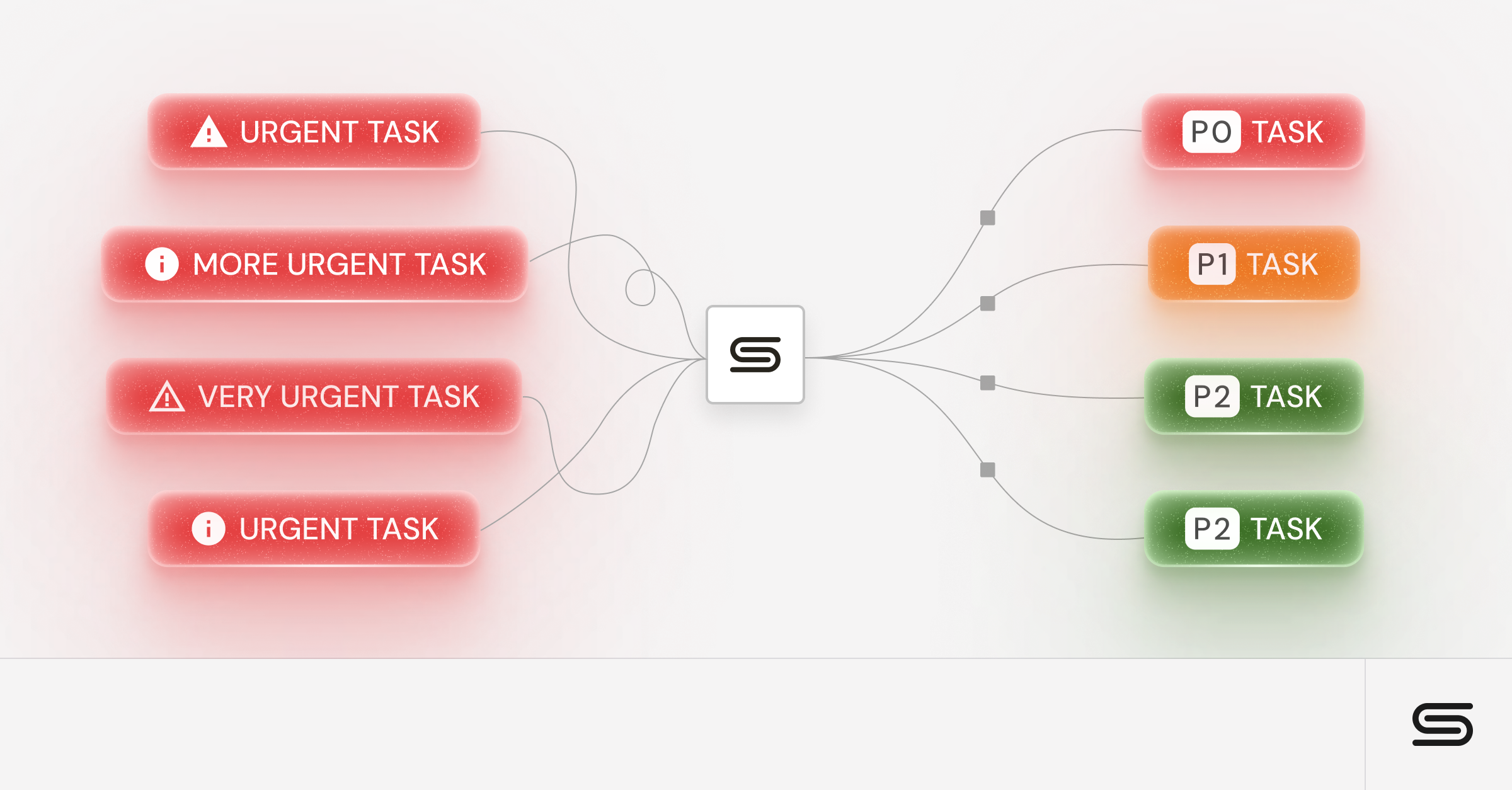
It centralizes legal intake from forms, Slack, Salesforce, and email into one place, then runs each request through structured workflow automation that routes, assigns, and escalates without manual chasing.
Legal teams get live status tracking through matter management and clear analytics and reporting on volume, turnaround, and capacity. Because it is built for Legal rather than adapted from a ticketing tool, it reflects how legal work actually moves through the business.
Book a demo to see how Streamline AI helps legal teams manage service requests from intake to resolution. Book a demo.
Choosing A Legal Service Request Management Tool
The right tool supports legal workflows rather than generic task management. Legal teams should weigh whether a platform can handle privileged work, complex intake, automated routing, matter context, reporting, and integrations with the systems the business already uses. A tool that was built for another function and retrofitted for Legal will keep showing its seams.
Must-Have Capabilities
Before committing to any platform, confirm it covers the core functions that legal service delivery actually requires. Missing even one of these usually means a workaround that erodes the system's value over time.
- Legal-Specific Intake Forms: Forms designed around legal request types, not generic fields.
- Configurable Workflows: Processes you can adapt without engineering help.
- Automated Routing: Assignment by type, priority, and owner.
- Request Triage: Built-in logic for prioritizing work.
- Status Tracking: Live visibility for requesters and legal staff.
- Role-Based Permissions: Access controls that protect sensitive matters.
- Reporting Dashboards: Metrics on volume, turnaround, and workload.
- Audit Trails: A defensible record of every request and decision.
- Collaboration Features: A shared space for legal and business stakeholders.
- Legal Workflow Automation: Approval chains and escalations that run on their own.
Integration Requirements
A legal service request platform should connect to the tools requesters already use. Integrations with Slack, email, contract systems, document management, and business collaboration platforms let you meet people where they work while keeping Legal's process structured behind the scenes.
The point is to reduce the friction of submitting a request without sacrificing the structure that makes the process scalable. When integration is an afterthought, adoption stalls because the business resents the extra steps.
Questions To Ask During Evaluation
A focused set of questions cuts through vendor messaging fast. Use these during demos to distinguish legal-first platforms from generic tools that wear a legal label.
- Can the tool support different intake forms by request type?
- Can requests be routed automatically?
- Can Legal set priorities, SLAs, and triage rules?
- Does it provide visibility into workload and request status?
- Can it report on volume, turnaround time, and bottlenecks?
- Was it built for legal teams or adapted from another function?
- Does it support legal privilege, confidentiality, and role-based access?
Why Streamline AI Is The Right Fit For Legal Service Request Management
Fast-growing legal teams need more than a shared inbox or a generic ticketing queue. They need a system designed around how legal work actually flows through the business, from the initial request to final approval.
Streamline AI is a legal-first platform for managing service requests, intake, routing, workflows, visibility, and reporting in one place, built by former in-house counsel who lived the exact problems it solves.
It helps legal teams reduce manual triage, provide requesters with real-time status, standardize intake across the business, automate workflows, and give Legal Ops leaders the data they need to manage demand and prove value. Instead of fighting tools that were built for other departments, your team gets one designed for the way legal requests behave.
Ready to move legal requests out of email, spreadsheets, and generic ticketing tools? Book a demo to see how Streamline AI can help your legal team scale service delivery. Book a demo.
Frequently Asked Questions About Legal Service Request Management
What Is Legal Service Request Management?
Legal service request management is the process of capturing, triaging, routing, tracking, and reporting on requests sent to an in-house legal team. It gives Legal a structured way to handle demand from the business, collect the right information upfront, assign work consistently, and give requesters and leaders visibility into status and progress.
How Is Legal Request Management Different From Generic Ticketing?
Legal request management accounts for context, confidentiality, privilege, judgment, and flexible workflows that generic ticketing ignores. IT-style tickets follow predictable categories, but legal requests often involve ambiguity, shifting facts, and multiple stakeholders. A legal-first system reflects how Legal assesses risk, assigns work, manages approvals, and protects sensitive matters throughout the request lifecycle.
Why Is Legal Intake Important?
Structured legal intake collects the right details at the point of request, based on the request type. This reduces the back-and-forth that delays work, since lawyers no longer have to chase basic facts before they begin. Strong intake is the foundation of accurate routing, reliable triage, and trustworthy reporting across the legal team.
What Types Of Legal Requests Can Be Managed This Way?
Legal service request management can handle contract reviews, privacy reviews, marketing approvals, employment questions, compliance requests, regulatory matters, vendor reviews, NDAs, and general legal questions. Each request type can have its own intake form, routing rules, and timelines, allowing a single system to manage very different kinds of work without forcing them onto a single rigid path.
How Does Legal Request Routing Work?
Legal request routing sends each incoming request to the right owner automatically, based on factors such as request type, priority, region, business unit, or assigned legal owner. Instead of relying on a single person to manually forward requests, routing rules assign requests instantly and consistently, removing a common bottleneck and preventing work from landing on the wrong desk.
What Metrics Should Legal Teams Track?
Legal teams should track request volume, turnaround time, lawyer workload, response time, bottleneck locations, request type, and demand by business unit. These metrics reveal where work gets stuck, how much the team is actually handling, and where capacity is strained, giving legal leaders the data to make staffing decisions and prove the department's value.
When Should A Legal Team Move Beyond Email And Spreadsheets?
A legal team should move beyond email and spreadsheets when request volume climbs, work becomes hard to track, response times turn inconsistent, or leadership lacks visibility into workload and demand. With around 10 or more requests per lawyer per week, manual methods tend to break down, and the team starts looking slow despite working hard.


.avif)