.avif)
Legal teams at fast-growing companies are closing more deals, onboarding more vendors, and fielding more contract requests than ever before. But the volume isn't the problem. The problem is that most teams are managing that volume with processes that were never built to handle it.
Contract requests come in through email, are approved over Slack, tracked in spreadsheets, and stored across shared drives that nobody fully controls.
By the time a contract reaches someone qualified to review it, half the context is missing, and the clock is already running. The business is waiting. Legal is chasing information. And the perception that legal is the bottleneck gets harder to shake.
Most conversations about contract management automation focus on the review stage and address topics such as AI-assisted redlining, faster approvals, and e-signature.
Those tools matter. But they don't fix the workflow. If contracts arrive without the right information, get routed to the wrong person, or disappear into a folder after execution, automating the review stage just makes you faster at the wrong process.
Key Takeaways
- Contract management automation covers the full lifecycle, from intake to obligation tracking, not just drafting and review.
- Most workflow failures happen before a contract ever reaches legal, due to broken intake and missing context.
- Rules-based routing and structured intake forms eliminate the manual triage that slows teams down.
- Post-signature automation, renewal alerts, obligation tracking, and deadline monitoring are where most teams have the biggest blind spots.
- Ready to see how Streamline transforms your contract workflow from request to resolution? Book a demo and see why fast-growing teams trust Streamline to run their legal operations.
What is Contract Management Automation?
Contract management automation is one of those terms that means different things to different people.
A procurement leader thinks about vendor agreement templates. A sales ops leader thinks about faster MSA turnaround. A general counsel thinks about risk exposure and compliance. All of them are right, and that's exactly why so many automation initiatives fall short.
They solve one piece of the lifecycle while leaving the rest intact.
The Full Contract Lifecycle
A contract doesn't begin when a lawyer opens a document. It begins when someone in the business decides they need one. That moment marks the start of the lifecycle, and it's where most automation strategies fail to reach.
The full contract lifecycle runs through these stages:
- Request and Intake: A business stakeholder submits a contract need, ideally with all relevant context attached
- Triage and Routing: Legal determines the contract type, priority, and which attorney or practice group should handle it
- Drafting: A first version is created, either from a template or from scratch
- Review and Redline: Legal reviews the draft, marks up non-standard clauses, and negotiates terms
- Approval: Internal sign-off from the appropriate stakeholders based on contract value, type, or region
- Execution: Signatures collected, and the contract goes into effect
- Storage: The executed contract is filed in a searchable, accessible repository
- Obligation Tracking: Key dates, renewal windows, and contractual commitments are monitored on an ongoing basis
Automation can touch every one of these stages. Most teams are only using it for two or three of them.
The Three Zones of Contract Automation
It helps to think about the lifecycle in three zones, each with its own automation opportunities and failure modes.
The pre-signature zone covers everything from request through execution. This is where speed matters most and where the most time is lost. Structured intake, automated routing, AI-assisted review, and approval chain automation all live here.
The execution zone is narrower and works with e-signature and final version control. Most teams have this covered. It's the zone that gets the most attention, yet it's rarely where the biggest inefficiencies live.
The post-signature zone is where contracts go to be forgotten. Obligation tracking, renewal alerts, compliance monitoring, and repository management all live here. It's also where the most expensive mistakes happen that nobody catches until the invoice arrives.
The Reasons Why Contract Workflows Fail
A contract lifecycle management platform is not a workflow fix. It's a contract repository with automation capabilities layered on top. Teams that buy a CLM expecting it to solve their process problems have learned that a CLM is only as good as the process feeding it.
If contracts arrive without context, if routing decisions are still made manually, and if business stakeholders still submit requests via email, the CLM becomes an expensive storage system. The chaos just moves upstream.
Broken Intake: The Delay Before the Delay
The biggest source of contract delay has nothing to do with how fast legal reviews a document. It has to do with what legal receives when a request comes in.
When a sales rep emails legal asking for an MSA, they rarely include the counterparty details, deal value, governing law preference, or any attached term sheets. Legal has to ask. The rep has to respond. Legal has to ask again.
Days pass before the review even begins, leaving the rep frustrated. Intake causes the problem.
Structured intake forms solve this by requiring requesters to provide all relevant context before a contract enters the legal queue. Conditional logic takes it further: an NDA request surfaces different fields than a vendor agreement or an SOW, so legal always gets the right information for the right contract type.
For teams looking to automate their legal intake processes, this is consistently the highest-leverage starting point.
Version Control and the Multi-Tool Problem
Most in-house legal teams use four or more tools to manage a single contract from request to signature. A request comes in via email, gets tracked in a spreadsheet, drafted in Word, redlined via email again, approved via Slack, and stored in a shared Google Drive folder.
Every handoff between tools creates an opportunity for versions to diverge. Reps redline the wrong draft. Approvers reference outdated terms. Someone sends the signature version before legal has reviewed it.
These may seem like mistakes, but they’re a byproduct of a fragmented workflow.
Good legal workflow management software centralizes contract activity so that every stakeholder is always working from the same version, with a complete audit trail of who changed what and when.
Post-Signature Blind Spots
Once a contract is executed, most legal teams move on. The agreement gets filed, the matter gets closed, and attention shifts to the next request in the queue. What doesn't happen, at least not systematically, is ongoing monitoring.
Auto-renewal clauses are one of the most common sources of unnecessary spend in corporate legal departments. A vendor contract renews automatically, the invoice arrives, and legal is asked why they didn't flag it.
The answer is usually that nobody was tracking it. According to ContractWorks research, 46% of organizations missed at least one automatic contract renewal in the past year. For some, it was four or more.
Obligation-tracking automation extracts key dates and commitments from executed contracts and pushes them into calendars and alert systems. Legal gets notified before a renewal window closes, not after.
| Stage | Manual Process Problem | What Automation Fixes |
|---|---|---|
| Intake | Missing context, email-based requests, constant back-and-forth | Structured forms with conditional logic capture all required information upfront |
| Routing and triage | Manual assignment decisions, inconsistent prioritization | Rules-based routing sends contracts to the right attorney based on type and risk |
| Review and redline | Hours spent on first-pass review, non-standard clauses missed | AI flags deviations from playbook and suggests approved language automatically |
| Approval | Approval chains tracked manually, delays when approvers are unavailable | Automated approval workflows with escalation rules keep contracts moving |
| Storage | Contracts scattered across drives and email folders | Centralized, searchable repository with version control and access permissions |
| Obligation tracking | Renewal dates and obligations managed in spreadsheets or not at all | Automated alerts fire before key dates, obligations tracked against contract terms |
What Contract Management Workflow Automation Looks Like
Knowing where workflows break down is the first step. The second is mapping automation to each failure point with enough specificity to actually implement it. Here's what that looks like across the lifecycle for in-house legal teams managing high contract volume.
1. Structured Intake That Captures the Right Context Upfront
The goal of intake automation is not to make it easier to submit a contract request. The goal is to make sure legal never has to ask a follow-up question before starting work.
That requires intake forms built around contract type, with conditional logic that adapts based on the requester's selection.
- An NDA request might require the counterparty name, relationship type, and whether mutual or one-way terms apply.
- A vendor agreement might require the business owner, procurement category, estimated contract value, and any existing SOW attachments.
- A sales agreement routed through Salesforce might automatically pre-populate counterparty details.
When every request arrives with the necessary information attached, legal intake and triage become a matter of routing rather than investigation. That's where the time savings actually come from.
Streamline AI is built specifically for this problem. In-house legal teams use Streamline to collect contract requests through structured forms, Slack, email, or Salesforce, or wherever their business stakeholders already work.
Every request arrives with the context that legal needs to begin work immediately, with no follow-up email. Streamline's AI-powered email intake reads unstructured requests and automatically converts them into structured matters, so even teams whose requesters prefer email don't lose the benefits of structured intake.
The result is faster triage, cleaner routing, and a legal team that's no longer spending the first 48 hours of every contract cycle chasing basic information. That first-48-hours drag is the norm, not the exception: Streamline AI's 2026 Benchmark Report found 63% of business professionals wait four or more days for a routine contract review — the legal contract turnaround data automated intake and routing are built to fix.
Book a demo to see how Streamline fits into your existing contract workflow.
2. Rules-Based Routing and Approval Automation
Once a contract request is submitted with complete context, the next decision is who handles it and in what order. For legal teams managing dozens of contract types across multiple practice groups, making those decisions manuallyis a significant time drain.
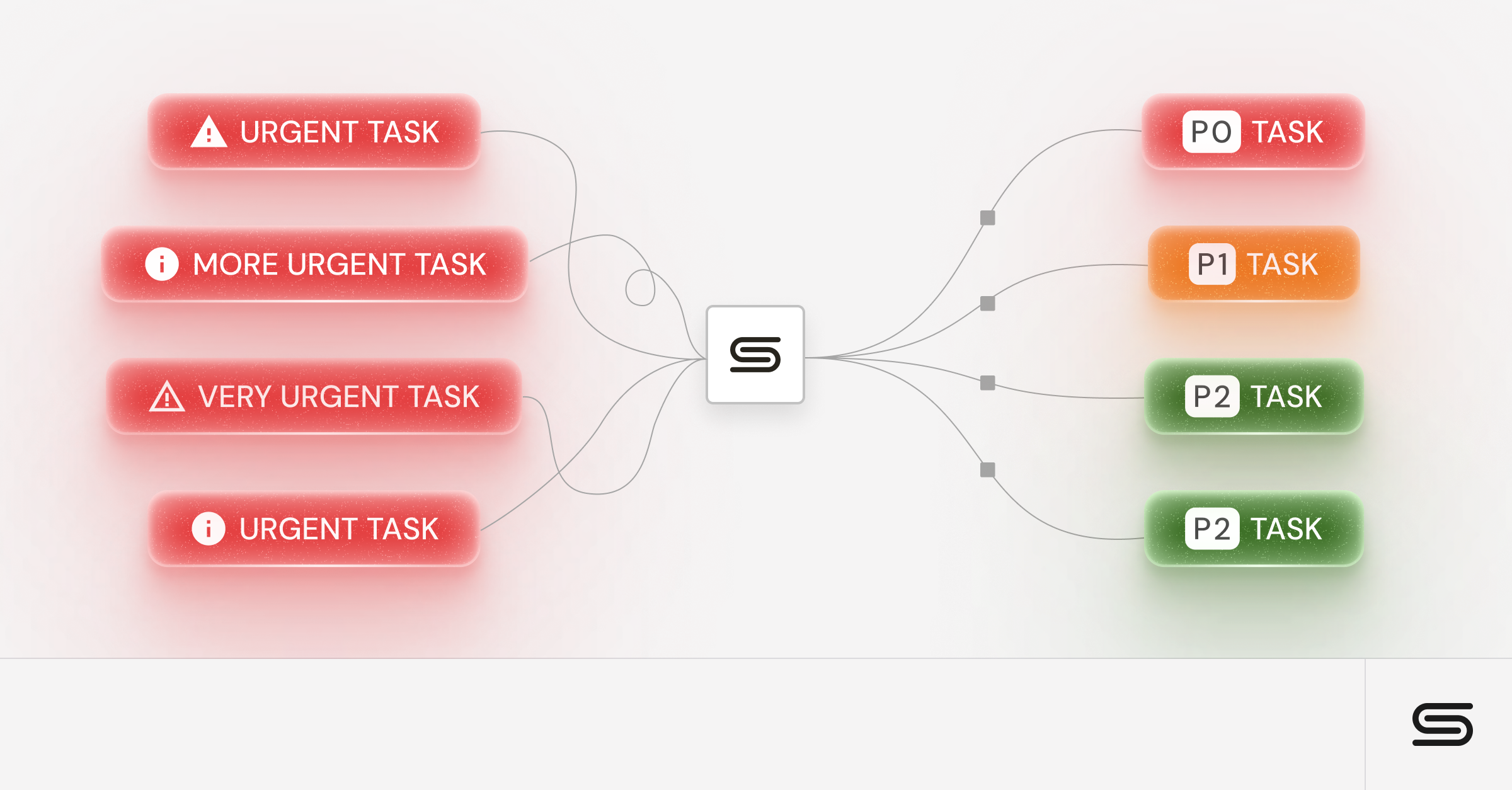
Rules-based routing eliminates that. The system evaluates contract type, value, counterparty geography, and risk level, and automatically assigns the matter to the appropriate attorney or practice group.
A low-value NDA goes to a junior associate with a 24-hour SLA. A high-value enterprise MSA gets routed to senior counsel with a different approval chain and a different set of required reviewers.
Approval automation works the same way. Rather than manually notifying each approver and tracking responses across email threads, the system triggers the approval chain, sends reminders when approvers are unresponsive, and escalates automatically when SLAs are at risk.
For teams that want a system for prioritizing legal requests, this kind of rules-based logic is the foundation.
3. AI-Assisted Review and Redlining
This is the stage that gets the most attention in contract automation conversations, and for good reason. First-pass contract review is time-consuming, repetitive, and well-suited to automation.
AI-powered review tools use natural language processing to scan incoming contracts and flag clauses that deviate from the team's standard playbook. A limitation-of-liability clause below the organization's acceptable threshold is flagged. An indemnification clause with non-standard carve-outs gets surfaced. Pre-approved alternative language from the clause library gets suggested in context, so the attorney isn't drafting from scratch — they're evaluating and approving.
The practical outcome is that attorneys spend their time on the clauses that actually require judgment, not on reading through pages of standard language to confirm it hasn't changed.
Teams with strong contract playbook best practices in place get the most out of this layer, because the AI is only as good as the approved language it has to work with.
4. Obligation Tracking and Renewal Alerts
Post-signature automation is the part of the contract lifecycle that most teams haven't built yet. It's also where the financial risk tends to concentrate.
Once a contract is executed, the obligation-tracking automation extracts key dates — renewal windows, termination notice deadlines, milestone dates, and payment terms — and pushes them into a monitoring system.
Legal receives alerts before those dates arrive, not after. The team can review the contract, decide whether to renew or renegotiate, and act with enough lead time to actually influence the outcome.
The same logic applies to ongoing compliance obligations. If a vendor contract requires quarterly security certifications, that obligation gets tracked. If a partnership agreement includes exclusivity terms that expire after 18 months, that date is in the system. Nothing lives only in the executed PDF.
Common Implementation Mistakes That Kill ROI
Most contract automation failures are not technology failures. The software works. The failure is in how the implementation was planned, scoped, and rolled out. These are the patterns that derail even well-funded initiatives.
Automating Before the Workflow Is Mapped
It's tempting to buy the platform first and figure out the workflow later. Implementation teams often learn, too late, that they've built automation on top of a process that was never clearly defined.
When the software has ambiguity, who approves this type of contract? What's the SLA for this request type? Where does this contract get stored? Implementation is essentially paused while those decisions get made.
Before selecting any tool, legal teams should map their current contract workflow in enough detail to answer those questions. Identifying where contracts stall, where context goes missing, and where handoffs break down gives you a clear picture of where automation opportunities actually live.
That map becomes the implementation spec.
Starting Too Big, Too Fast
Trying to automate all contract types simultaneously is one of the most reliable ways to guarantee none of them get automated well.
The approval logic for a complex enterprise MSA is fundamentally different from that for an NDA, which is different again from that for a vendor SOW. Treating them the same way in an implementation so complex that it can't go live.
The teams that implement successfully almost always start with a single high-volume, low-complexity contract type, usually NDAs or standard vendor agreements, and get that workflow running cleanly before expanding.
A phased approach produces working automation faster, generates adoption data that improves the next phase, and builds internal confidence in the system. The benefits of legal process automation compound over time, but only if the foundation is solid.
Ignoring Change Management
Legal tech fails not because of missing features, but because business stakeholders don't use the new system. A requester who's been emailing their contracts to a lawyer for three years will keep doing that unless there's a clear reason not to. If the old path still works, people take it.
Change management means making the new process easier than the old one, not just better. It means communicating the "why" to business teams, not just the "how." And it means identifying internal champions in sales, procurement, and finance who can model the new behavior for their peers.
The best legal workflow software in the world doesn't deliver ROI if only the legal team uses it.
How Streamline Fixes the Contract Workflow Before It Reaches Your CLM
The most common mistake legal teams make with contract automation is trying to solve the problem at the review stage when the real problem starts at intake. By the time a contract reaches a lawyer for review, the delays, missing info, and routing confusion have already happened. That's the problem Streamline was built to fix.
Streamline AI sits at the front of the contract workflow, giving legal teams a centralized intake system that captures every request with the right context before work begins.
Business stakeholders submit contract requests through structured forms, Slack, email, or Salesforce. Streamline automatically routes each request to the right attorney based on contract type, risk, and priority. SLA tracking keeps the team accountable and gives legal leadership real-time visibility into what's open, what's overdue, and where the actual bottlenecks are.
For teams already using a CLM, Streamline integrates directly with Ironclad, so the intake and triage layer connects seamlessly to the review and execution layer.
Your legal team deserves a complete workflow. Book a demo to see how Streamline fits into your contract operations.
Frequently Asked Questions About Contract Management Automation
How Is Contract Management Automation Different From a CLM?
A CLM is a type of contract management software focused primarily on drafting, negotiation, execution, and storage. Contract management automation is a broader concept that encompasses everything before a contract reaches the CLM, including intake and triage, as well as post-signature processes such as obligation tracking and renewal alerts. A CLM is one component of a fully automated contract workflow, not the whole thing.
What Types of Contracts Should Be Automated First?
Start with high-volume, low-complexity agreements, such as NDAs, standard vendor agreements, and MSAs with few non-standard terms. These contracts follow predictable patterns, which makes them easiest to automate reliably. Once the workflow runs smoothly for routine agreements, teams can expand automation to more complex contract types with greater confidence and fewer configuration issues.
How Long Does It Take to Implement Contract Management Automation?
A focused pilot, typically covering one contract type and one intake channel, can go live in four to six weeks. A full deployment covering multiple contract types, approval chains, and integrations typically takes three to six months. Teams that try to implement everything at once tend to take longer and achieve less. Phased rollouts consistently outperform big-bang implementations in both speed and adoption.
What Metrics Should Legal Teams Track After Implementing Automation?
The most useful metrics are time-to-close by contract type, intake volume by request channel, SLA compliance rate, and the percentage of contracts that required back-and-forth before review began. These metrics reveal where the workflow still creates friction and where automation delivers the most value. Teams with strong legal department KPIs in place before implementation can measure impact more precisely.
Can Small Legal Teams Benefit From Contract Management Automation?
Yes, though the entry point looks different. Smaller teams typically benefit most from structured intake and routing automation, which eliminates the manual triage work that consumes disproportionate time when headcount is limited. AI-assisted review adds leverage for solo counsel or two-person teams handling high contract volume. The key is choosing automation that's proportionate to the team's actual request volume and contract complexity.
What Is the Difference Between Pre-Signature and Post-Signature Automation?
Pre-signature automation covers everything from intake through execution — structuring requests, routing to the right reviewer, assisting with drafting and redlining, and managing approval chains. Post-signature automation takes over after execution, tracking key dates, monitoring obligations, flagging renewal windows, and maintaining the contract repository. Both matter, but most teams invest heavily in pre-signature automation and underinvest in post-signature monitoring, which is where many of the most expensive mistakes occur.

.avif)