.avif)
Your legal team is handling more requests than ever before. Contract reviews pile up, compliance questions flood your inbox, and stakeholders across the business expect faster turnaround times and even faster ROI.
According to the 2024 ACC Chief Legal Officers Survey, 59% of CLOs reported increased workloads, while only 3% saw a decrease. The math simply doesn't add up when you're trying to scale legal support with the same (or fewer) resources.
This is precisely where AI legal assistants can help. These tools represent a shift in how in-house legal teams operate, moving from reactive firefighting to proactive, data-driven legal operations.
But with so much hype around artificial intelligence, it can be a bit confusing to fully understand where AI can help in legal day-to-day operations. This guide will cover what these tools actually do, where they deliver real value, and how they're genuinely transforming legal practice.
Key Takeaways
- AI legal assistants reduce overload on in-house teams by automating intake, triage, and repetitive admin work—so lawyers spend more time on judgment-heavy work and less on routing/status updates.
- Core capabilities usually combine NLP (understanding unstructured requests), workflow automation (routing/escalations/approvals), and knowledge retrieval (surfacing playbook answers, templates, and prior positions fast).
- Biggest wins show up in time-to-close for contracts and requests, because AI standardizes the “front door” and pre-screens for risk instead of forcing attorneys to triage everything manually.
- AI tools improve consistency and risk control by applying playbooks the same way every time, reducing variability across attorneys and lowering compliance gaps.
- Legal ops benefits are real: AI captures matter data automatically (volume, cycle time, bottlenecks, SLA performance), making resourcing and budget conversations evidence-based.
- The best-fit platforms are purpose-built for legal (privilege/permissions, matter structure, legal workflows) and integrate into where the business already works (email/Slack/Teams/Salesforce/CLM).
- Book a demo with Streamline AI to see how a purpose-built AI legal assistant can cut legal turnaround times, increase visibility, and help your in-house team scale without adding headcount.
What Is an AI Legal Assistant?
An AI legal assistant is software that uses artificial intelligence, typically natural language processing (NLP) and machine learning, to help legal professionals complete, usually redundant or menial, tasks more efficiently. Unlike traditional legal software that relies on rigid templates and manual data entry, AI legal assistants can interpret unstructured information, learn from patterns, and automate decisions that previously required human judgment.
For in-house legal teams specifically, AI legal assistants, such as Velo Copilot, Streamline's AI legal assistant, address the operational challenges that generic productivity tools simply can't handle. When a business stakeholder emails a contract question, an AI legal assistant can parse the request, identify the contract type, route it to the appropriate team member, and even suggest relevant templates or past responses.
This happens in seconds, not hours.
How AI Legal Assistants Work
AI legal assistants represent yet another use case of AI that has become extremely efficient over the last few years. These systems combine several components to automate processes and save countless hours on administrative tasks. At their core, these tools combine several AI capabilities:
Natural Language Processing (NLP)
NLP allows the AI to read and interpret human language, whether that's an email from a sales rep asking about contract terms or a clause buried in a vendor agreement. The AI doesn't just match keywords; it understands meaning and intent.
When someone asks 'Can we extend payment terms for Acme Corp?', the AI recognizes this as a contract modification request related to payment terms, even if those exact words don't appear in your playbook.
For a deeper understanding of how these technologies apply to legal work, check out our guide to generative AI and LLMs for lawyers.
Machine Learning
Machine learning enables the system to improve over time.
As your team uses the AI legal assistant, it learns your preferences, your common request types, and your typical response patterns. A new contract review platform might struggle with your specific clause language initially, but after processing a few hundred agreements, it starts to recognize your company's risk tolerance and negotiation tendencies.
This is why organizations that commit to using AI tools consistently see compounding returns on their investment.
Workflow Automation
The AI layer sits on top of workflow automation capabilities. Once the AI understands a request, it can trigger appropriate actions: assigning the matter to the right attorney, requesting additional information from the requester, escalating based on risk level, or even approving low-risk requests automatically.
This is where in-house teams see the biggest time savings. What used to require manual triage and routing now happens instantly.
Knowledge Management
AI legal assistants can serve as intelligent knowledge bases. Rather than hunting through SharePoint folders or pinging colleagues on Slack, team members can ask the AI questions like 'What's our standard position on indemnification caps?' and receive relevant answers drawn from your approved templates, playbooks, and past decisions.
This dramatically reduces duplicate work and ensures consistency across the team.
Benefits of AI Legal Assistants for In-House Teams
The value proposition of AI legal assistants becomes clearer when you map capabilities to specific in-house pain points. Here's where these tools deliver the most significant impact:
1. Faster Time-To-Close on Legal Requests
When legal requests arrive through inconsistent channels (email, Slack, hallway conversations), simply figuring out what needs attention becomes a full-time job. AI-powered intake systems follow the front door approach and capture requests from wherever they originate and immediately begin processing them.
That's not efficiency for efficiency's sake; it's the difference between being perceived as a business accelerator versus a bottleneck.
2. Reduced Administrative Burden
Lawyers pass through years of tedious law school courses and managing spreadsheets or status update emails is not a good use of their work hours.
AI legal assistants handle request tracking, status updates, follow-up reminders, and basic data entry automatically. This frees attorneys to focus on the analytical and strategic work that actually requires their expertise.
The business gets better legal support, and lawyers experience less burnout.
3. Data-Driven Decision Making
One of the persistent challenges for legal departments is demonstrating value in terms that the executives can understand. AI legal assistants automatically capture data that is usually not featured in traditional department KPIs and would be nearly impossible to gather manually: request volumes by type, average turnaround times, bottleneck identification, and resource allocation patterns.
This data transforms budget conversations. Instead of vague claims about being 'underwater,' you can show exactly how many requests your team handles, where delays occur, and make evidence-based cases for additional resources.
4. Improved Consistency and Risk Management
Human inconsistency is a liability in legal work. When different team members handle similar requests differently, you create compliance gaps and confusion for business partners. AI legal assistants apply the same rules consistently across all requests.
They reference the same playbooks, apply the same risk thresholds, and make sure your legal position doesn't shift based on who happened to pick up a particular matter.
This consistency is particularly valuable for regulated industries where documentation and standardization are essential.
5. Enhanced Collaboration and Visibility
Legal work rarely happens in isolation. Most matters involve multiple departments that depend on timely updates to keep their own work moving forward.
- Sales teams need clear visibility into where a contract sits in review so they can forecast revenue accurately and avoid overpromising close dates to customers.
- Procurement and finance rely on real-time updates during vendor negotiations to align pricing approvals, budget planning, and onboarding timelines.
- Compliance and risk teams need ongoing information on regulatory matters to assess exposure, prepare audits, or respond to external inquiries.
- Executives and legal leadership require a high-level view of active matters, bottlenecks, and risk areas without pulling attorneys into status meetings or ad hoc reporting.
AI legal assistants provide real-time, shared visibility into matter status, ownership, and next steps, without requiring attorneys to manually relay updates. When stakeholders can see exactly where their request stands and what is blocking progress, ‘just checking in’ messages disappear, handoffs improve, and legal stops being perceived as a black box.
6. Scalability Without Proportional Headcount
The most compelling benefit for many in-house leaders is the ability to scale legal support without a corresponding increase in headcount. When request volume doubles, your AI legal assistant handles the additional intake, triage, and administrative work without complaint.
This doesn't mean eliminating legal jobs; it means each lawyer can handle more matters at a higher quality level.
Gartner predicts that by 2024, legal departments will have replaced 20% of generalist lawyers with non-legal staff, supported by technology that handles routine legal tasks.
Common Use Cases for AI Legal Assistants
While AI legal assistants can support a wide range of legal functions, certain use cases deliver particularly strong ROI for in-house teams:
1. Contract Review and Analysis
Contract review is often the highest-volume, most time-consuming activity for in-house teams. AI legal assistants can pre-screen contracts against your playbook, flagging deviations and high-risk clauses for attorney attention while approving standard terms automatically.
This doesn't replace legal judgment; it focuses legal judgment where it's actually needed. Some organizations have cut initial contract review time by 60-80% while maintaining quality standards.
2. Legal Intake and Triage
Managing the inflow of legal requests is a challenge that scales poorly. As companies grow, request volume increases, and manual triage becomes increasingly unsustainable.
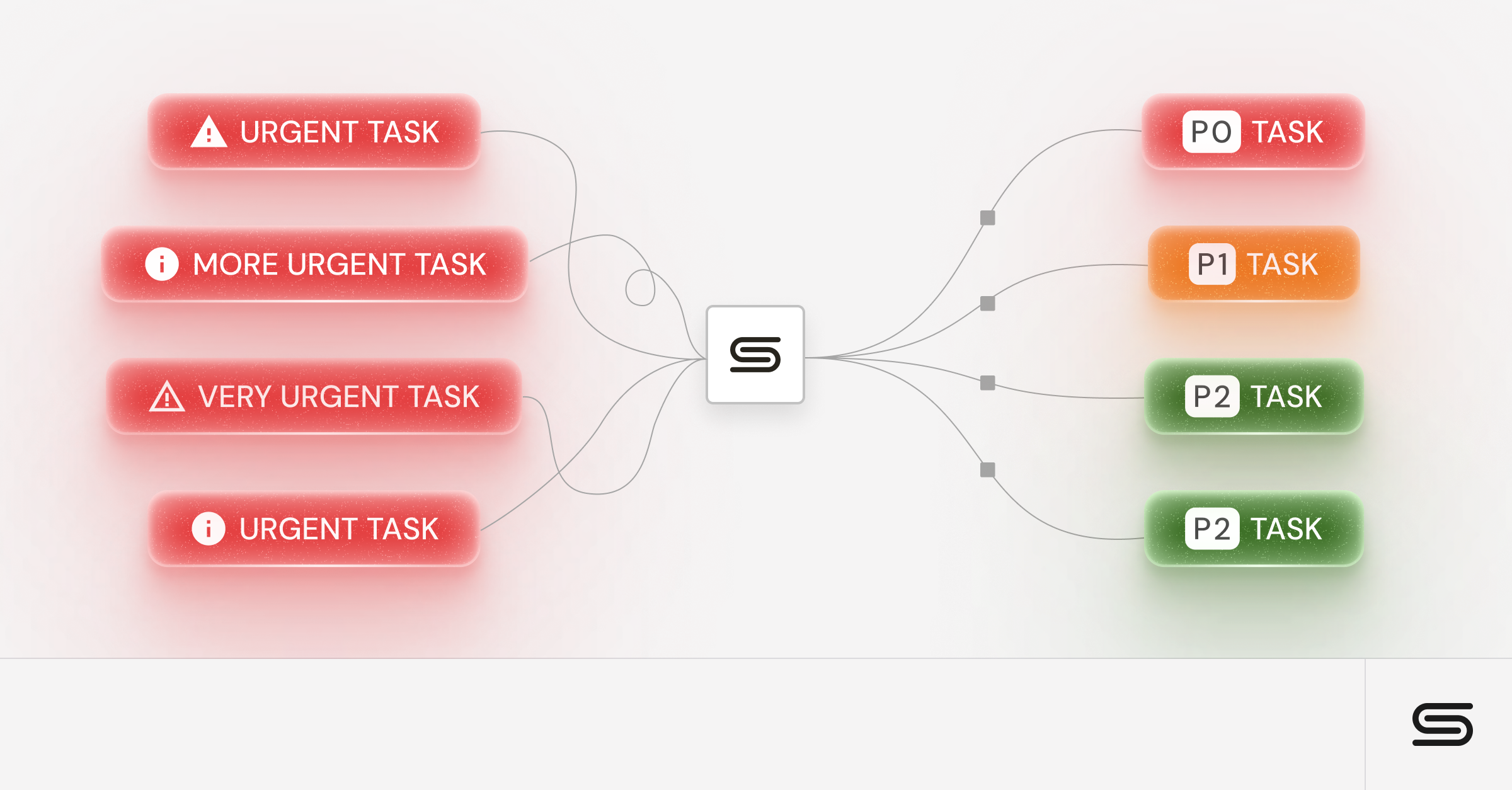
AI-powered intake systems capture requests from any channel (email, Slack, Teams, web forms), classify them by type and priority, and route them to appropriate team members based on expertise and current workload. The result is faster response times and more equitable work distribution.
Streamline AI's AI-powered email intake is specifically designed for this challenge.
3. Research and Knowledge Retrieval
Legal research traditionally requires significant time investment. AI legal assistants can search across internal documents, past matters, approved templates, and external sources to surface relevant information quickly. When an attorney needs to know how the company has historically approached a particular issue, the AI can find relevant precedents in seconds rather than hours.
4. Compliance Monitoring
Regulatory requirements change constantly, and tracking these changes across jurisdictions is a substantial undertaking. AI tools can monitor regulatory updates, flag relevant changes, and make sure that company policies and practices remain compliant. This is particularly valuable for organizations operating across multiple jurisdictions or in heavily regulated industries like healthcare, financial services, and biotechnology.
5. Legal Operations Reporting
Generating meaningful reports on legal department performance historically required manual data compilation. AI legal assistants automatically track relevant metrics and can generate reports on demand.
Want to know the average turnaround time by request type? SLA compliance rates? Workload distribution across the team? These insights become available without spreadsheet gymnastics.
How to Choose the Right AI Legal Assistant
The AI legal assistant market has grown rapidly, and not all solutions deliver equal value. Here's what to consider when evaluating options:
Purpose-Built vs. Generic Tools
Generic workflow tools like Jira or Asana can technically be configured for legal intake, but they weren’t designed for legal-specific workflows. As a result, teams often rely on heavy customization, layered permissions, and manual workarounds to approximate how legal work actually functions.
Over time, these configurations become difficult to maintain, limit visibility, and create friction for both legal and business users.
Purpose-built legal systems are designed to:
- Reflect legal-native workflows such as matter intake, review, approvals, and cross-functional handoffs
- Enforce confidentiality, privilege, and role-based visibility at the matter level by default
- Capture structured legal data instead of free-text tasks, enabling meaningful reporting and prioritization
- Reduce long-term configuration and maintenance overhead as legal demand scales
- Improve adoption across legal and the business by using familiar legal concepts and terminology
In practice, teams that adopt purpose-built systems spend less time managing tools and more time simply doing their work, while stakeholders gain clear, consistent visibility without compromising legal standards.
Integration Capabilities
The best AI legal assistant is one your team will actually use. That means it needs to integrate with existing tools rather than requiring wholesale changes to how people work.
Strong integration with Slack, Microsoft Teams, Salesforce, and existing CLM platforms is non-negotiable here. If business stakeholders have to learn a new system to submit legal requests, adoption will take a pretty significant hit. Streamline AI's integration ecosystem is designed around this philosophy.
Implementation Timeline and Support
Some legal tech implementations drag on for months or even years, consuming resources without delivering value. Look for solutions that can be deployed in weeks, not quarters.
Ask about customer success support during and after implementation. The organizations that get the most value from AI legal assistants are those with strong vendor partnerships that help optimize usage over time.
Security and Compliance
Legal data is sensitive by nature. Any AI legal assistant must meet enterprise security standards, including SOC 2 compliance, encryption in transit and at rest, and appropriate access controls.
If you're in a regulated industry, confirm that the solution meets relevant requirements (though note that FedRAMP compliance remains rare in the legal tech space).
Flexibility and Customization
Every legal department has unique workflows, request types, and organizational structures. Rigid software that requires you to adapt to its processes creates friction.
Look for AI legal assistants that can be configured to match your existing workflows without requiring IT involvement for every adjustment. The ability to create custom intake forms, define routing rules, and modify workflows as needs evolve is essential for long-term success.
Streamline AI for Purpose-Built Matter Management
Streamline AI was built by legal, for legal. Founded by Kathy Zhu, former Associate General Counsel at DoorDash, Streamline AI was created specifically to address the operational challenges she experienced firsthand while scaling DoorDash's legal department during the company's explosive growth phase.
Unlike generic tools that require extensive customization or legacy legal tech that feels dated from day one, Streamline AI combines intuitive design with powerful AI capabilities.
The platform handles intake from any channel (email, Slack, Teams, web forms), uses AI to triage and route requests automatically, and provides real-time visibility for all stakeholders. Legal teams can set up workflows that align with their existing processes without needing IT assistance.
Key capabilities include:
- AI-Powered Email Intake: Automatically converts unstructured email requests into structured matters
- Intelligent Triage: Routes requests based on type, complexity, and team expertise
- Workflow Automation: Automates assignments, approvals, and escalations
- Real-Time Analytics: Tracks request volume, SLAs, and team performance metrics
- Seamless Integrations: Connects with Slack, Teams, Salesforce, Ironclad, and more
The platform is trusted by fast-growing companies like Grammarly, 8x8, and Demandbase. With a 4.8+ customer satisfaction rating and 11 G2 badges (including Best ROI, Easiest to Use, and Best Support), Streamline AI has earned recognition from the in-house legal teams actually using it daily.
Ready to see what an AI legal assistant can do for your in-house team? Book a demo with Streamline AI and experience the difference purpose-built legal technology can make.
AI Legal Assistant: Frequently Asked Questions
What Tasks Can an AI Legal Assistant Handle?
An AI legal assistant can handle a wide range of tasks, including contract review and analysis, legal intake and triage, document drafting and template generation, research and knowledge retrieval, compliance monitoring, and legal operations reporting. The most effective AI legal assistants focus on automating repetitive, time-consuming work while flagging complex matters that require attorney attention.
Will AI Legal Assistants Replace Lawyers?
AI legal assistants will not replace lawyers. These tools are designed to augment legal professionals by handling routine tasks, freeing attorneys to focus on strategic, high-value work that requires human judgment, relationship building, and creative problem-solving. The goal is to make each lawyer more effective, not to eliminate the need for legal expertise.
How Long Does It Take to Implement an AI Legal Assistant?
Implementation timelines vary by solution, but modern AI legal assistants like Streamline AI can be deployed in weeks rather than months. The key factors affecting the timeline include the complexity of your existing workflows, integration requirements with other systems, and the level of customization needed. Solutions designed specifically for legal teams typically implement faster than generic tools that require extensive configuration.
Are AI Legal Assistants Secure Enough for Confidential Legal Work?
Enterprise-grade AI legal assistants are built with security as a priority. Look for solutions with SOC 2 compliance, encryption in transit and at rest, role-based access controls, and audit logging. Many AI legal assistant providers undergo regular security assessments and can provide documentation of their security practices. Always review security certifications and practices before selecting a solution for handling confidential legal matters.
.avif)