.avif)
Quick Answer: Legal project management is the practice of running substantial legal work as a defined project instead of an open-ended request, using four phases: define scope, plan, deliver, then review and close. For an in-house team the case for it is capacity, since demand keeps climbing while headcount stays flat. It differs from the law firm version in one respect that changes everything: with no client to bill and no engagement letter, scope arrives informally and shifts without paperwork, so in-house LPM concentrates on prioritization and visibility rather than budget-versus-fee tracking. Not every legal task qualifies. A single NDA is a request, while a privacy program rollout is a project.
Your GC asks how long the data privacy rollout will take. The answer is going into a board update, so it needs to be right.
You can't give one. Not because the work is unknowable, but because nothing about the last four projects like it was ever written down. No record of how long the reviews ran, who was waiting on whom, or where the six weeks went.
So you offer a range wide enough to be safe and narrow enough to sound credible, and hope.
That guesswork is the tell. Large legal work behaves differently from the requests filling your queue. It runs for months, it depends on people outside legal, and it slips a week at a time rather than all at once.
Legal project management is what closes that gap. Run a piece of work in phases, with scope agreed in writing and an owner against every milestone, and it produces its own record as it goes. Ask the same question next quarter and the answer comes from evidence.
This guide covers which legal work is worth running as a project, the four phases most teams use, and how the in-house version differs from the law firm playbook behind almost everything written on the subject.
Key Takeaways
- Legal project management treats significant legal matters as structured projects with defined scope, ownership, timelines, and outcomes, replacing reactive work patterns.
- The four phases are define scope, plan, deliver, and review and close. Each one ends in a deliverable rather than a status update.
- In-house LPM is not law firm LPM. With no client to bill and no engagement letter, the discipline shifts from protecting a fee to protecting capacity.
- Not all legal work is a project. Requests, matters, and projects need different handling.
- Structured legal work generates the operational data legal leaders need to justify resources.
- Running large legal work out of your inbox is a choice. Book a demo and see every request, matter, and project in one place.
What Is Legal Project Management?
Legal project management, often shortened to LPM, applies project management principles to legal work. At its core, it means treating a legal matter, whether a contract negotiation, a regulatory filing, or an internal investigation, as a discrete project with defined objectives, timelines, resources, and success criteria.
The concept isn't new. Law firms began adopting project management techniques in the early 2000s as clients demanded more predictable pricing and transparent processes.
What's changed is that in-house legal teams now face the same pressures that drove law firm adoption: rising workloads, constrained budgets, and business partners who expect the same accountability from legal that they see in other departments.
LPM sits inside the wider discipline of legal operations, which covers technology, vendor management, budgeting, and process design across the department. Project management governs how individual bodies of work get planned and delivered.
A team can run a mature legal project management practice without having a legal ops function at all, and plenty of smaller departments do exactly that.
Which Legal Work Should Be Run as a Project
Apply project discipline to every incoming request and your team will resent it inside a month. Most legal work isn’t a project, and the departments that get value from LPM draw that line early.
A request is a single, bounded ask with a predictable path. An NDA on standard paper, a routine vendor agreement, a quick question about a marketing claim. It has one owner, one deliverable, and it closes in days.
A matter is related legal work that stays open longer and may involve several people. A negotiated enterprise agreement, an employment dispute, a trademark filing. It needs tracking, but not a plan.
A project has multiple workstreams, stakeholders outside legal, a timeline in weeks or months, and a defined end state. It fails without a plan.
Three questions separate the third category from the first two:
- Sequencing: does the work contain more than one workstream that has to happen in order?
- External dependency: does finishing it depend on people outside the legal team?
- Knock-on delay: would a two-week slip in one part push the whole thing back?
The more of these apply, the stronger the case for running the work as a project
Work that usually qualifies includes a data privacy program rollout, M&A diligence, a policy overhaul, a contract template refresh across a business unit, or entity setup in a new jurisdiction.
Work that usually does not include single NDAs, standard vendor paper, one-off advice, and routine renewals. Those need speed, not phases.
One error costs more than the rest. A high volume of similar requests isn’t a project, it’s a process problem, and the fix is a prioritization framework and stronger intake rather than a project plan.
| Attribute | Request | Matter | Project |
|---|---|---|---|
| Typical duration | Hours to days | Days to weeks | Weeks to months |
| People involved | One owner | One or two owners | A team plus stakeholders outside legal |
| Planning needed | None | Light tracking only | Explicit plan with phases |
| Worked example | Standard NDA | Negotiated enterprise agreement | Privacy program rollout |
| Main risk | Backlog builds up | Status gets lost | Scope drift and stalled dependencies |
| Handled by | Intake and triage | Matter management | Legal project management |
How In-House LPM Differs From Law Firm LPM
Almost every guide to LPM on the open web was written for law firms, and it shows. Those assumptions break the moment you apply them to a department with no billable hours, and following them too literally is how in-house teams end up with a process nobody uses.
Law firm LPM exists to protect a fee. The engagement letter defines scope, the budget is a commercial commitment, and scope creep is a contract issue with a defined remedy.
In-house has none of that scaffolding. What you are protecting instead is your team’s capacity, which is finite, shared across every request in the building, and invisible to the people making those requests.
That capacity problem is well documented. The 2021 EY Law Survey, run with the Harvard Law School Center on the Legal Profession, interviewed more than 1,000 law department leaders across 22 countries. It found 87% say their department spends too much time on low-value, routine work, and that roughly one in five in-house counsel hours goes that way.
The ACC 2024 Chief Legal Officers Survey puts the other half of the squeeze on record: 59% of CLOs reported heavier workloads than the year before, while few expected meaningful headcount growth. More work, same people, no mechanism for showing the trade-off.
Here is where that plays out day to day:
- No engagement letter: scope arrives as a Slack message, a hallway conversation or a forwarded email thread, and it is rarely written down by anyone.
- No billable hours: effort is not tracked by default, so the true cost of a project stays hidden unless someone deliberately measures it.
- Scope creep has no remedy: a stakeholder adding a workstream is not a contract variation, it is Tuesday. The only defense is a written scope somebody agreed to.
- The client is a colleague: you will work with this person again next month, which makes hard scope conversations harder and makes the relationship part of the project.
- Success is measured differently: a firm measures realization against budget. An in-house team measures cycle time, on-time delivery, and whether the work got absorbed without anyone burning out.
- Prioritization is zero-sum: every hour on a project is an hour off the request queue, and nobody outside legal sees that trade-off.
So in-house LPM front-loads two things law firms get for free. Write the scope down, because no engagement letter will do it for you. Make capacity visible, because nobody outside legal can see the trade-off you’re making.
That second point is also what turns LPM into a defense against legal burnout rather than another cause of it. A project planned against real capacity is a project that does not quietly consume evenings.
The Four Phases of Legal Project Management
Published LPM models commonly use a four-phase structure. Names vary a little between sources, the sequence does not, and this four-phase model is the closest thing to a standard legal project management framework in use today.
The legal project management phases below fold in the scope, resourcing, timeline, and documentation practices that make up the discipline. What changes in-house is how much weight you give each.
Phase 1: Define Scope
Every legal project begins with a request, and how you capture it shapes everything that follows. Structured intake gathers what is needed to define scope upfront: what is being asked, the desired outcome, the deadline, and the relevant background or materials.
Without clear intake, lawyers spend the first week chasing clarifications and scope drift becomes inevitable. Effective intake captures details such as:
- The type of work and the business objective driving it, such as closing a deal or addressing a compliance concern
- Deadlines that are externally fixed, as distinct from deadlines that are simply preferences
- Relevant documents, background, or prior agreements needed to begin work
- Key stakeholders, decision-makers, and approvers involved in the matter
- What sits outside the scope of the work
That last item is the one in-house teams skip and later regret. Say in plain terms what the work will deliver and what it won’t. A contract template refresh might cover redrafting standard terms and fallback positions, but not renegotiating anything already signed.
The deliverable of this phase is a written scope that a named business stakeholder has agreed to. Not a form and not a ticket. A short document both sides can point at.
Phase 2: Plan
Planning turns an agreed scope into sequenced work with named owners. Even a department of five benefits from explicit assignment once work runs past a couple of weeks.
Resource allocation means matching people to workstreams based on expertise, current workload, development goals, and availability. It also means naming a backup for anyone whose absence would stop the work.
It depends on visibility into capacity across the group: who is overloaded, who has bandwidth, and when to rebalance. That visibility prevents the common failure mode where senior lawyers drown while junior team members go underused.
Timelines need internal milestones even when no external due date exists. First draft complete, stakeholder review, final sign-off. These give early warning when work is going off track.
Planning also means mapping dependencies. A securities filing cannot go out until the financials are finalized. A vendor consolidation waits on procurement finishing its data pull. Identifying those handoffs early is what separates a plan from a wish list, because dependencies outside legal are where in-house projects most often stall.
The deliverable is a plan carrying owners, milestones, and marked dependencies. It should fit on one page.
Phase 3: Deliver
Delivery is where the legal work happens and the job shifts from planning to communication. Your plan’s value now is telling you when reality has diverged from it.
Set protocols for keeping stakeholders informed: who gets updates, in what format, and how often. Good communication prevents the business from being blindsided by a delay that legal knew about for weeks.
You're not aiming for more meetings or more emails. Calibrate communication to the work's complexity and urgency. Some projects need a weekly written summary and nothing else.
Delivery is also when scope changes arrive. Treat them as decisions rather than absorptions: when a stakeholder adds a workstream, name what it displaces and let them choose. Workflow automation helps by routing approvals and escalations without anyone chasing them by hand.
The deliverable is the legal work itself, plus a record of the decisions taken along the way.
Phase 4: Review and Close
Projects end, but the knowledge they generate holds its value only if someone captures it. This phase covers documenting decisions, recording what worked, and building institutional memory that survives personnel changes.
Run a short post-mortem on anything that ran more than a few weeks. Three questions cover most of the value:
- What took longer than expected?
- What information did we need and not have at the start?
- What would we template if we had to do this again?
Knowledge capture feeds the next project. Matter templates, clause libraries, or a note explaining why we took a negotiation position all reduce the cost of the next similar piece of work. Without it, each project starts from scratch and the same mistakes repeat.
Closing also means measuring. Cycle time against plan, on-time milestone rate, and the number of scope changes are enough to begin with. Teams already tracking legal department KPIs have the reporting habit to build on.
The deliverable is a closed project, a short retrospective note, and at least one reusable artifact.
| Phase | What Happens | Deliverable | Common Failure Point |
|---|---|---|---|
| 1. Define scope | Intake, background gathering, agreement on what is in and out | Written scope agreed by a named stakeholder | Scope stays verbal, so nobody can point at it later |
| 2. Plan | Assign owners, set milestones, map dependencies | One-page plan with owners and dates | Dependencies outside legal go unmapped |
| 3. Deliver | Legal work, status updates, scope-change decisions | The legal work plus a decision record | Scope changes absorbed silently instead of decided |
| 4. Review and close | Post-mortem, knowledge capture, measurement | Retrospective note and a reusable artifact | Phase skipped once the work is done |
Running a Vendor Consolidation Project End to End
The phases are easier to trust once you see them applied to work an in-house team would recognize.
Here is one project run start to finish at a SaaS company cleaning up vendor contracts after two years of fast growth:
The trigger: procurement flags 340 active vendor agreements across four systems, nobody knows how many auto-renew, and finance wants a budget number by quarter end.
Phase one, define scope. Legal, procurement, and finance agree the project covers identifying all active vendor agreements, extracting renewal dates, and termination windows, and flagging any with unusual liability terms. It does not cover renegotiating anything or building a permanent contract repository. That goes into a one-page document with three names on it.
The "does not cover" line does the heavy lifting. Without it, this becomes a renegotiation exercise by week three and misses the deadline entirely.
Phase two, plan. Two lawyers own contract review, procurement owns the data pull, finance owns the budget model. Milestones land at week two for the data pull, week four for the first hundred agreements, week seven for escalations, week nine for the report.
The dependency map exposes the obvious risk. Legal cannot start reviewing until procurement finishes the export, and procurement is doing this alongside its day job. So the plan builds in a week of float and sets a check-in at day ten.
Phase three, deliver. The data pull runs a week late, which the day-ten check-in catches early, and the planned float holds the end date. Then in week five a business unit asks whether legal can also renegotiate the three most expensive contracts while it is in there.
That is the scope change moment, and it gets handled as a decision rather than a favor. Legal says renegotiation adds roughly four weeks and pushes the report past the budget deadline, then asks finance which it would rather have. Finance picks the report, and the request is logged for next quarter.
Phase four, review and close. The report lands in week nine. The post-mortem surfaces that four-system sprawl cost about fifteen hours of pure data reconciliation, which becomes the evidence for a single-system proposal.
The reusable artifact is a vendor agreement review checklist that cuts per-contract review time for everything after it. The project also produced a number legal did not have before: how long a vendor agreement actually takes to review, now the basis for a service level with the business.
Legal Task Management Within a Project
A project plan describes the shape of the work. Legal task management keeps the individual pieces moving once the project is underway, and it is where most in-house projects quietly stall. Five habits do most of that work.
Prioritize by Urgency and Importance Separately
When a team is swamped, even starting is daunting. The distinction that matters is between genuinely urgent and merely labeled urgent.
Urgency is how soon the work needs to be finished. Importance is how much it matters to the business. They are different axes, and collapsing them into one is why everything ends up marked high priority.
Work that is both urgent and important goes first. A marketing compliance review for a campaign launching next week outranks a minor product question, even if the product question arrived earlier.
Use Legal Task Management Software Rather Than Lists
Jotting to-dos on paper works until requests arrive through four channels at once. After that, your personal list becomes a second job.
Purpose-built legal task management software tracks what sits on each person’s plate and where every item stands. At quarter-end, when Legal sees a flood of sales questions and contract requests, that visibility is what stops things from falling through.
The distinction from generic tools matters. Most project management tools built for lawyers fall down on the same points: no conditional intake fields, no routing on monetary thresholds, and access controls owned by IT rather than legal.
Automate Routing and Approvals
Manually routing reviews and approvals is the largest recoverable time sink in most legal departments. Automation moves the right task to the right person without anyone sending a chasing email.
Rather than back-and-forth threads gathering approvals and signatures, a workflow tool routes requests through a defined sequence and reports status at a glance.
Talk to Your Team About What Is Working
Regular discussions about priorities reduce duplicated effort and surface better ways of working. A monthly session on recurring pitfalls, such as sales contracting, pays for itself quickly.
Pooling what people have learned catches problems before they repeat, and many organizations can get these sessions approved for CLE credit.
Set Deadlines You Can Actually Meet
Attainable deadlines protect both quality and the team. Promise a one-day turnaround on work that needs real research and you set everyone up to fail. Meeting a deadline in week two buys more credibility than promising one in day three and missing it.
Where LPM Fits With Intake and Matter Management
Legal project management does not replace the systems already handling day-to-day legal work. It sits at the end of a progression, and seeing that progression clearly explains why only a fraction of legal work needs it.
Work enters through legal intake, which captures requests from across the business in structured form, so a request arrives complete and reaches the right person.
Triage then sorts what arrived. Most requests close at or shortly after this stage. The rest become matters.
Matter management tracks the open body of work: who owns it, what stage it's in, which documents belong to it, and when it is due. This covers the large majority of what an in-house team handles.
Legal project management applies to the subset big enough to need phases, a plan, and mapped dependencies. Perhaps one in twenty of what enters through intake, but those matters absorb a disproportionate share of senior capacity.
Each stage feeds the next. Weak intake produces poorly defined matters, and those produce projects that start without a real scope. A matter management system already holding ownership, status, and history hands a project its starting data instead of making someone assemble it.
It also explains a common diagnostic error. If you’re drowning in volume, you don’t have a project management problem. You have an intake problem, and project structure won’t fix it.
Common Failure Points
Even well-designed LPM programs hit the same obstacles, and most are predictable enough to plan around. These four come up again and again.
Treating Legal Work as Too Unpredictable to Plan
This objection is partially valid. Legal matters do involve more uncertainty than manufacturing widgets, but unpredictable does not mean unplannable. Think of legal work as weather. It is unpredictable too, and meteorologists still produce forecasts useful enough to plan around.
The solution is to build flexibility into the approach. Use ranges instead of point estimates. Plan for common scenarios rather than every outcome. Accept that some matters will blow up your timeline and build a buffer accordingly. The goal is to be right enough often that planning becomes worthwhile.
Resistance From Lawyers
Lawyers often view project management as administrative overhead that distracts from "real" legal work. This resistance usually stems from past experiences with poorly designed processes or tools that created work without adding value.
The argument that lands is that project management removes the most frustrating parts of the job. Chasing information, managing unrealistic expectations, and staying on top of an overwhelming workload all get easier with a system in place.
So start with quick wins that visibly improve the lawyer experience. If the intake form means they stop getting incomplete requests, they'll notice. If the workflow tracks matters so they don't have to maintain a status spreadsheet, they'll appreciate it.
Insufficient Leadership Support
Initiatives that lack GC or CLO backing tend to fizzle. Without leadership championing the effort, team members feel safe ignoring new processes when they're busy. The fix is to connect project management directly to leadership priorities.
If the GC cares about cycle time, show how project management delivers it. If the priority is demonstrating value to the CFO, emphasize the data. When leaders see it as advancing their goals, support follows.
Trying to Do Everything at Once
Large, all-at-once implementations rarely succeed. When teams try to change everything simultaneously, people get overwhelmed, usage drops, and the effort loses momentum.
A better approach is to start small. Choose one type of legal work, set it up properly, and make sure it works for the team before expanding to the next area. Small, visible wins build confidence and make long-term adoption far more likely.
Do You Need a Legal Project Manager?
Most in-house teams don’t need a dedicated legal project manager, and those that hire early often find the role has nothing to own. The threshold is volume, not headcount.
A dedicated role starts to make sense when the department runs several multi-month projects at once, or when a senior lawyer spends more than a day a week coordinating rather than practicing.
Below that threshold the job usually sits with one of three people:
- A legal operations lead, if the department has one, since project discipline is adjacent to the rest of that role.
- The lawyer owning the largest workstream, who works on a single project but doesn't scale past two.
- A paralegal or legal coordinator, who often has better visibility into where things actually stand than anyone else on the team.
No certification is required either way. Training programs exist through the Association of Corporate Counsel and various consultancies, but the teams that get there start with one project and build from there.
Watch for one signal: not whether projects finish, but whether they finish at a predictable cost to everything else in your queue.
How Streamline AI Supports Legal Project Management
You can’t buy legal project management. You decide to treat your largest pieces of legal work as things you can plan, then start with one: write the scope down, get a stakeholder to agree to it, name owners and milestones, map dependencies outside legal, and hold a post-mortem when it closes.
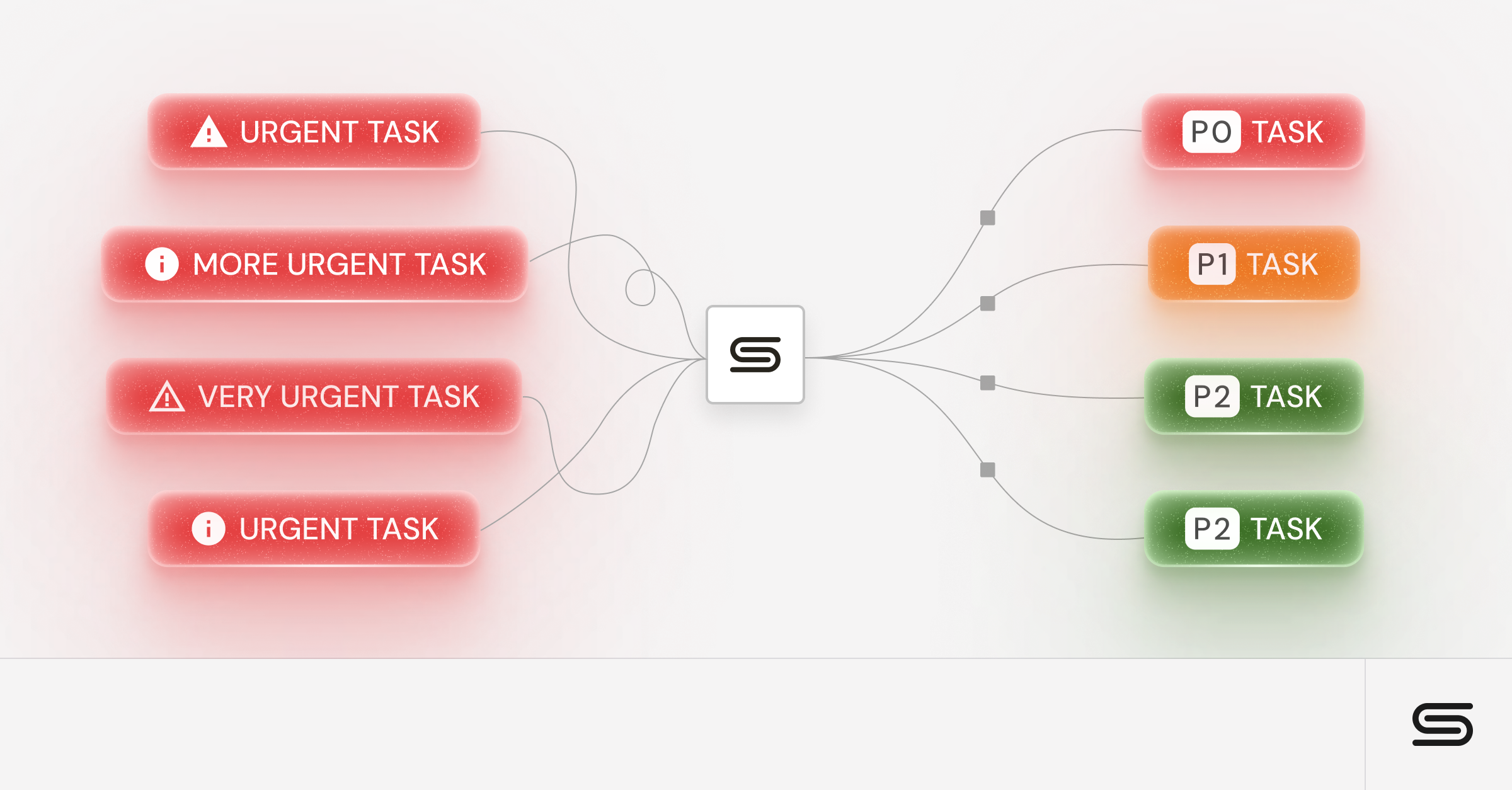
That discipline needs somewhere to live. Streamline AI centralizes intake across email, Slack, Teams, and web forms, so scope gets captured in structured form rather than reconstructed from a thread later.
Requests then route automatically by type, value or priority, which keeps the day-to-day queue moving while a project runs alongside it. Every matter carries its own owner, status, documents, and history, so a project starts with its data already assembled.
The analytics and reporting give legal leaders the numbers that make capacity trade-offs visible to the business: request volume by team, time spent at each review step, and where work actually sits when it stalls.
Pantheon is the closest real match to the vendor project above. After moving intake onto the platform, its legal team cut vendor review turnaround from multiple weeks to 24 hours and reported 55% greater budget visibility. Over 500 attorneys at companies including Grammarly, 8x8, and Demandbase now run their legal front door on it.
Stop running your biggest legal work out of an inbox. Book a demo and see what your team’s real capacity looks like.
Frequently Asked Questions About Legal Project Management
What Is Legal Project Management?
Legal project management is the application of project management methods to legal work. It treats a significant matter as a project with defined scope, named owners, milestones, and a close-out review. The approach began in law firms seeking predictable pricing and has since been adapted by in-house departments managing rising workloads against flat headcount.
What Are the Phases of Legal Project Management?
Most models use four phases: define scope, plan, deliver, and review and close. Scope establishes what the work covers and excludes. Planning assigns owners, milestones, and dependencies. Delivery executes the work while managing communication and scope changes. Review captures lessons and reusable material before the project formally closes.
Do In-House Teams Need a Legal Project Manager?
Most do not. A dedicated role makes sense when a department runs several multi-month projects at once, or when a senior lawyer spends more than a day a week coordinating rather than practicing. Below that threshold the responsibility usually sits with a legal operations lead, a paralegal, or the lawyer owning the largest workstream.
What Is the Difference Between Legal Project Management and Matter Management?
Matter management tracks all open legal work, recording ownership, status, documents, and deadlines across every active item. Legal project management applies to the smaller subset of matters large enough to need phases, a plan, and dependency mapping. Matter management is continuous tracking. Project management is a temporary structure applied to complex work.
Which Legal Work Should Be Run as a Project?
Work qualifies when it includes multiple workstreams that need sequencing, depends on people outside legal, and would slip overall if one part is delayed. Privacy program rollouts, M&A diligence, policy overhauls, and new-jurisdiction entity setups usually qualify. Single NDAs, routine vendor paper, and one-off advice do not.
What Tools Support Legal Project Management?
Purpose-built legal platforms combining structured intake, workflow automation, matter tracking, and reporting suit in-house teams best. Generic project tools such as Jira or Asana can be configured for legal work but often lack conditional intake fields, threshold-based routing, and legal-specific access controls. The tool should follow process design rather than substitute for it.
How Do You Measure Legal Project Management Success?
Start with cycle time from intake to close, on-time milestone completion rate, and the number of scope changes per project. As practice matures, add resource utilization, stakeholder satisfaction, and the share of projects producing a reusable artifact. The metrics that matter most reflect what leadership is trying to improve.


.avif)